Category: Electronics & IoT

  • Wreath with Lights

    Wreath with Lights

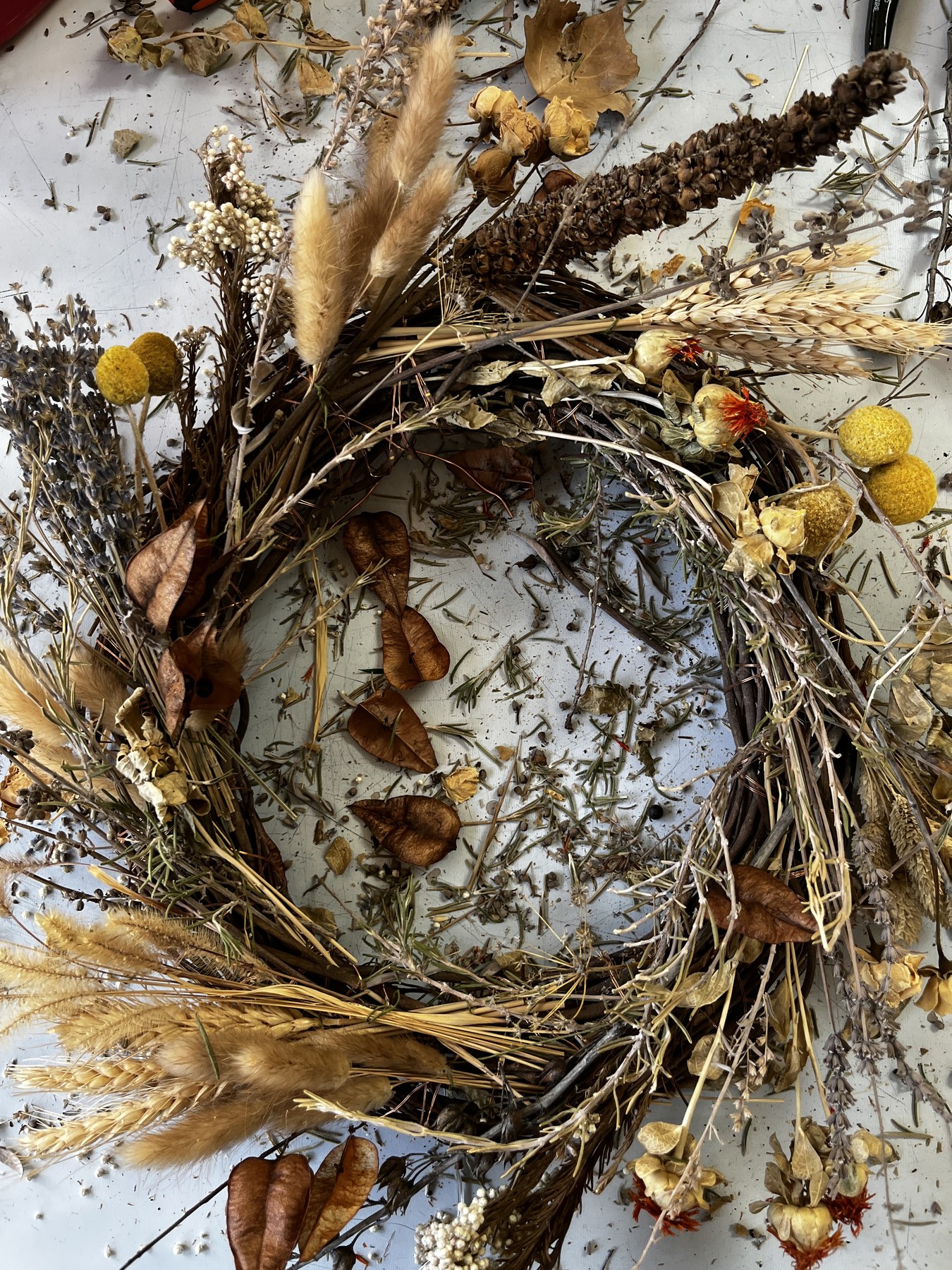
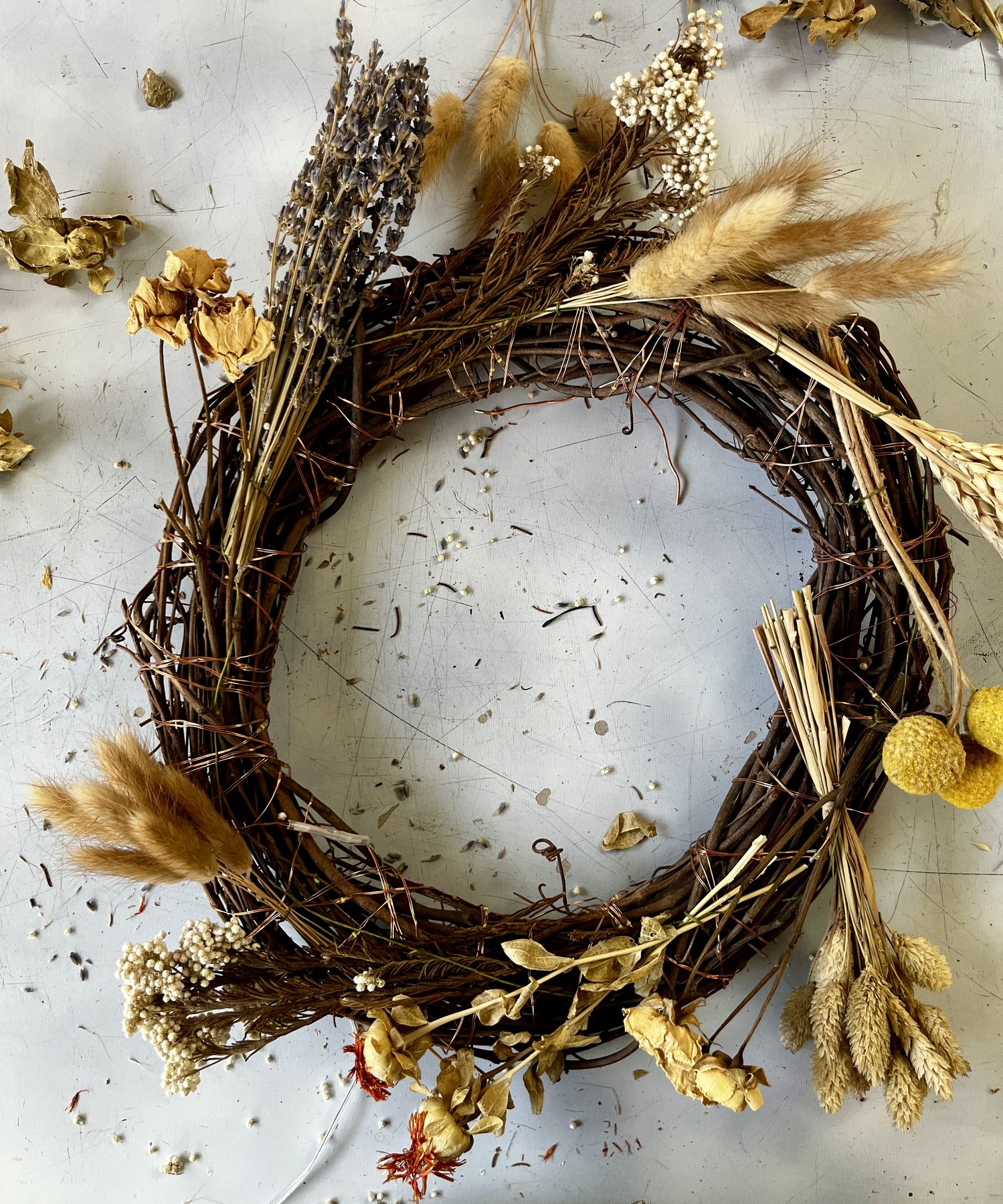
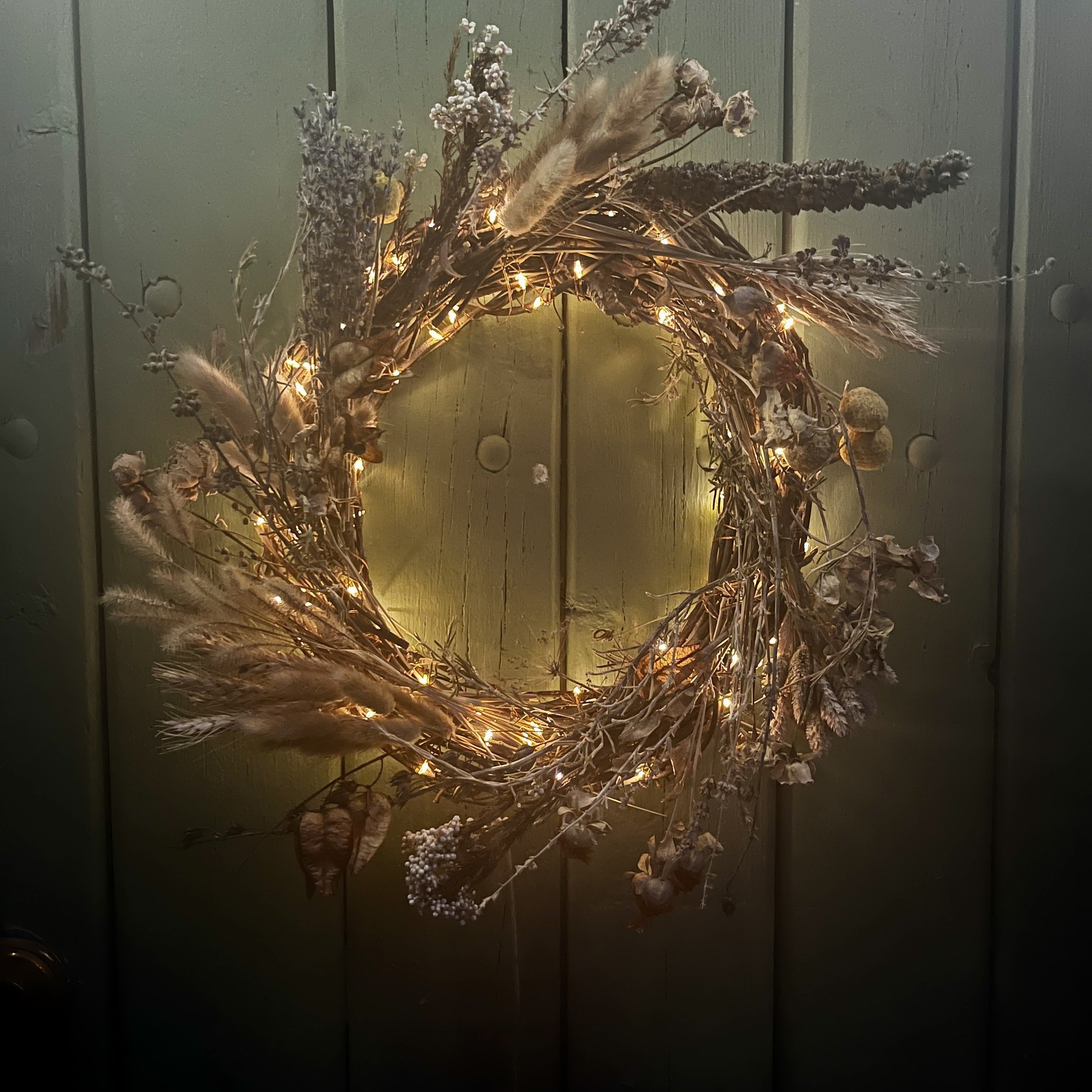
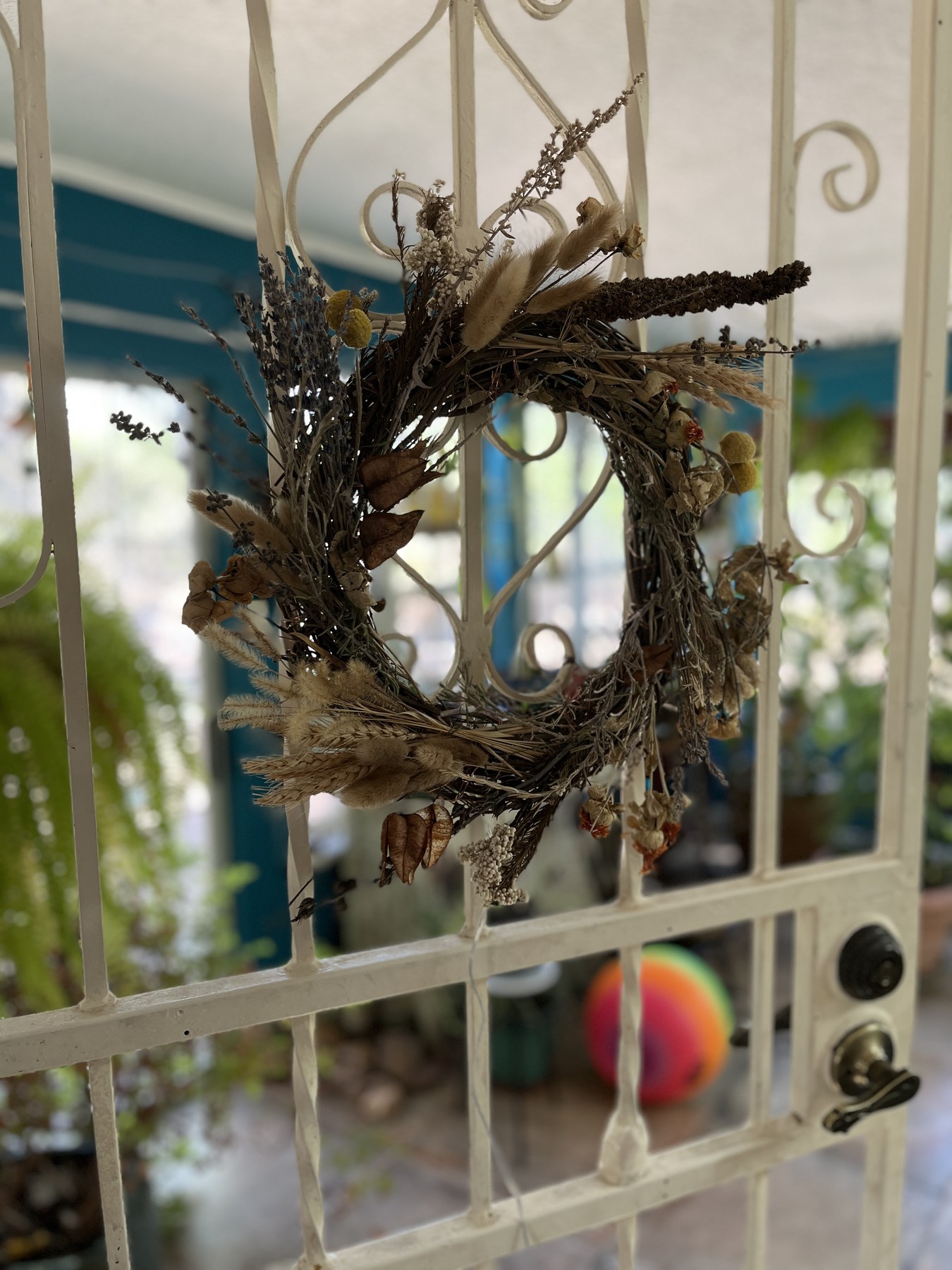
    A wreath of dried flowers that lights itself at dusk and puts itself out at dawn, wired so a controller can move in later.

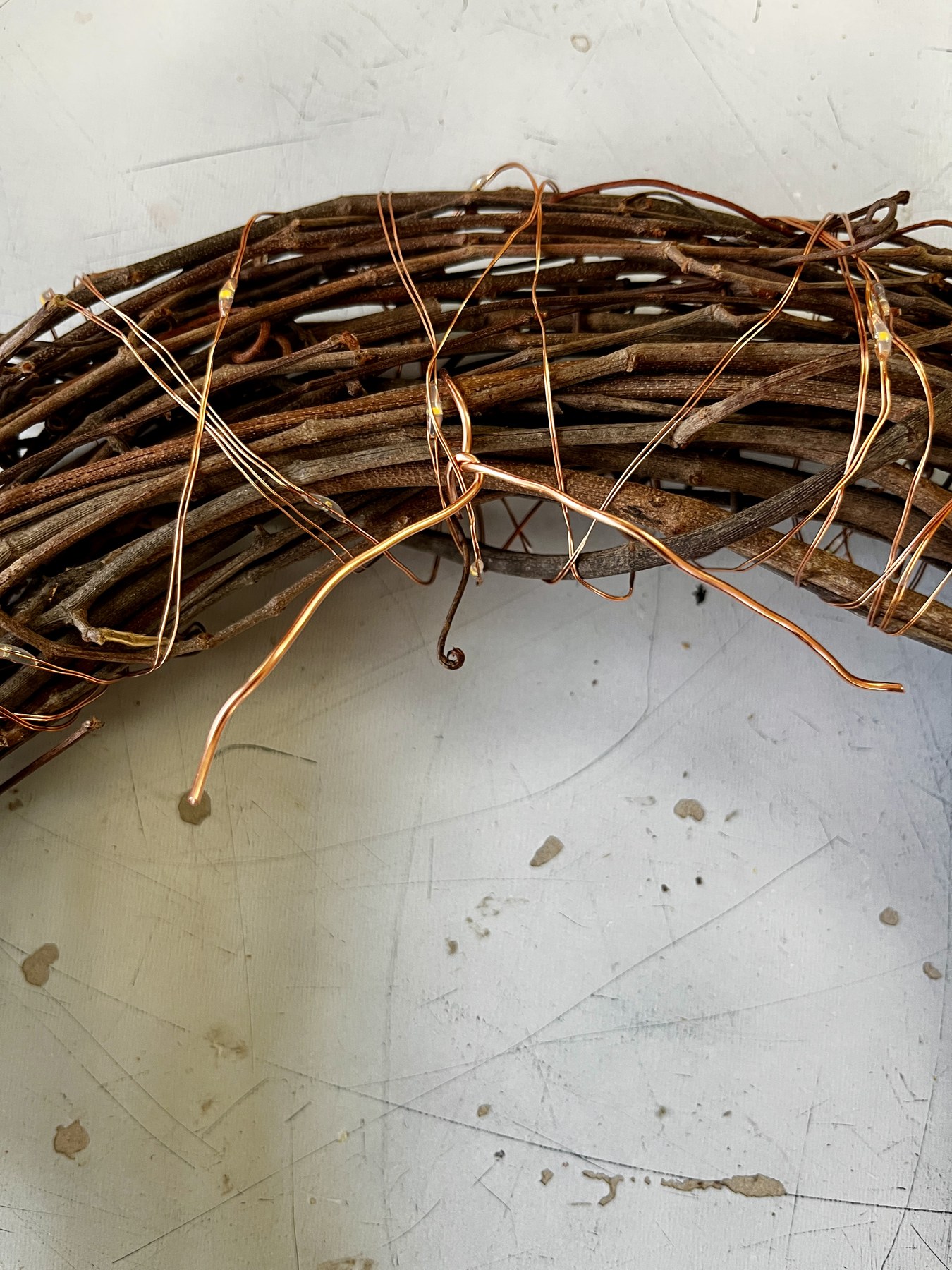
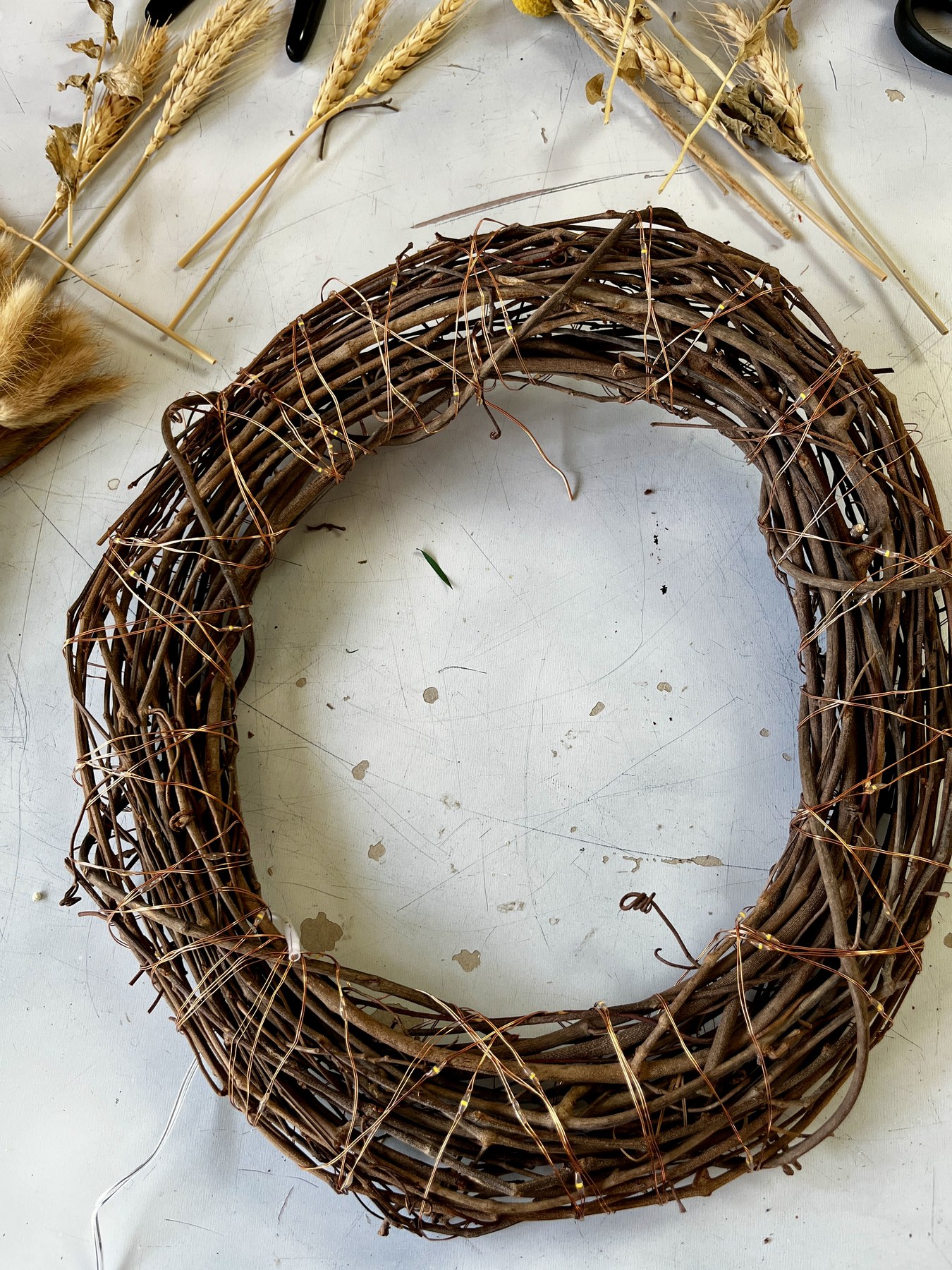
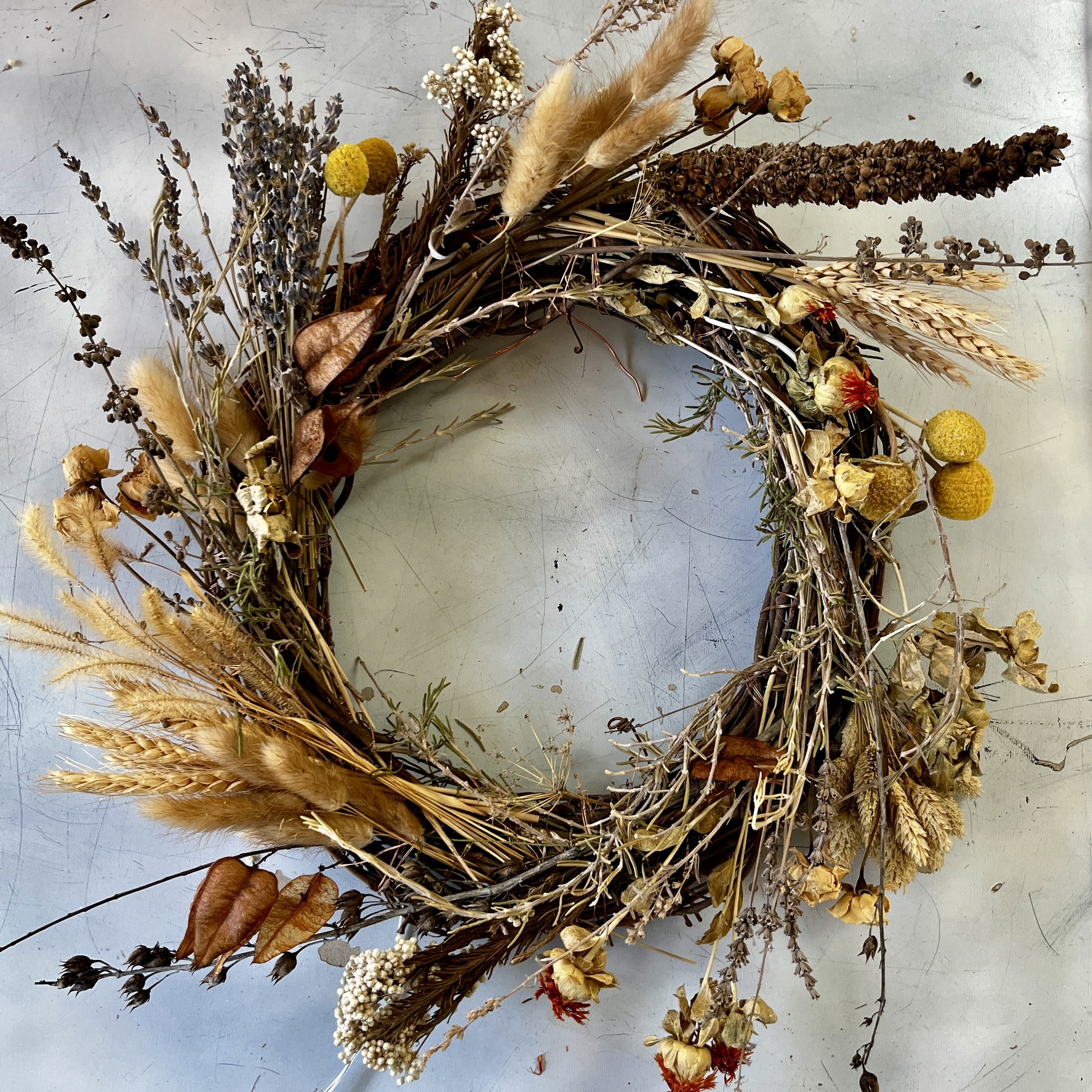
    It starts as a twig ring and a pile of dried material — lavender, wheat, billy buttons, seed pods, grasses. What makes it more than an arrangement is the copper wire wound through the base first. The stems and the fairy lights both attach to that armature, which means the whole thing has a conductive spine running through it rather than a strand of lights draped over the top.

    The lights are a solar module that already knows what time it is. Its driver chip boosts a single 1.2 volt rechargeable cell to about 3 volts for the LEDs, manages the charge off the panel, and senses light level — so the wreath comes on at dusk and goes off at dawn without being told, and without a wire to the house.

    “IoT-ready” means the armature and the routing were built to accept more later: swap the driver for a microcontroller and the same wreath can take motion sensing, weather-triggered behaviour, or addressable LEDs doing something other than glowing steadily. It is not smart yet. It is built so it can be.
    Built from

    • Solar fairy-light module — YX8628H driver, inductor boost, dusk/dawn sensing
    • One 1.2 V rechargeable cell
    • Copper wire armature
    • Twig wreath base
    • Floral wire
    • Dried flowers, grasses, wheat and seed pods

    Read the full build on Hackster →

    Dried botanicals, twig base, copper wire, solar LED module · 2026
  • Smart Tillandsia Care

    Smart Tillandsia Care

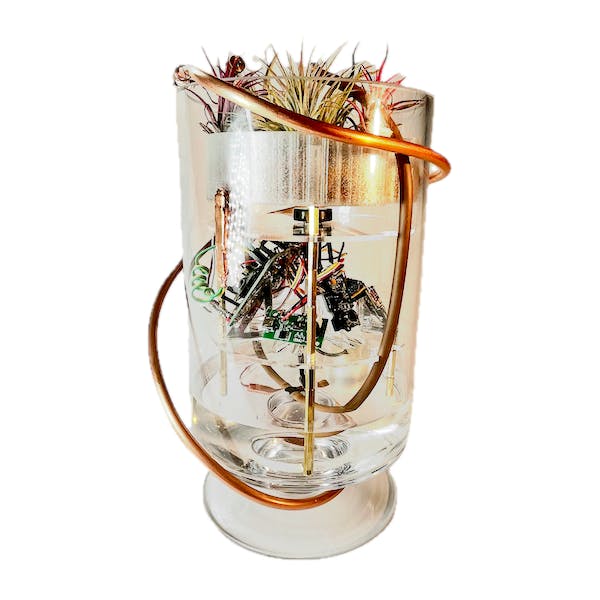
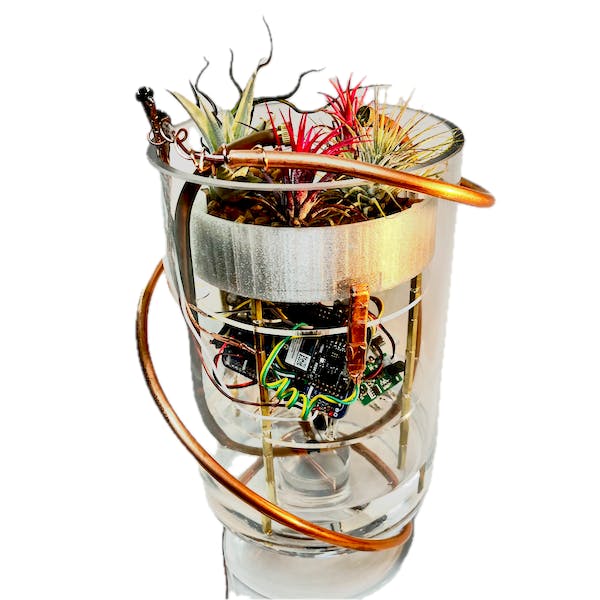
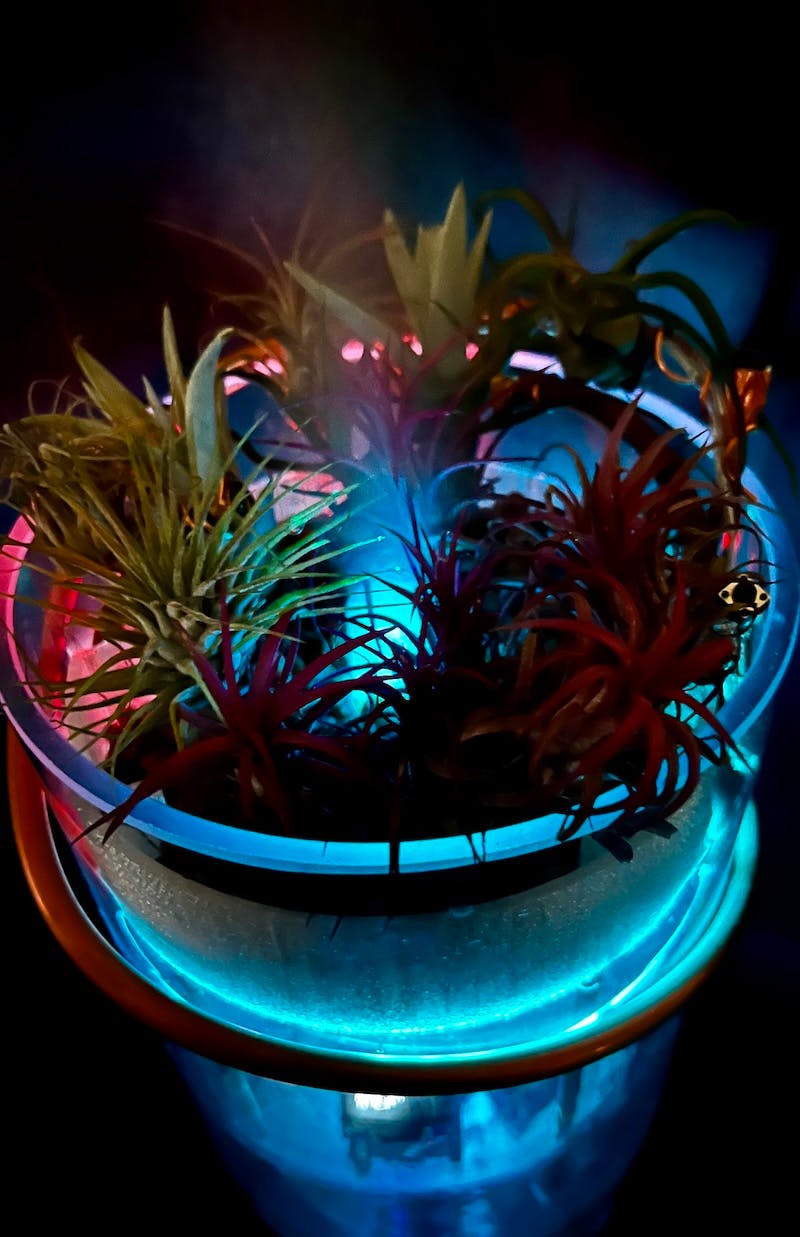
    A compact, slightly over-engineered habitat that keeps a colony of tillandsia alive on a schedule instead of on my memory.

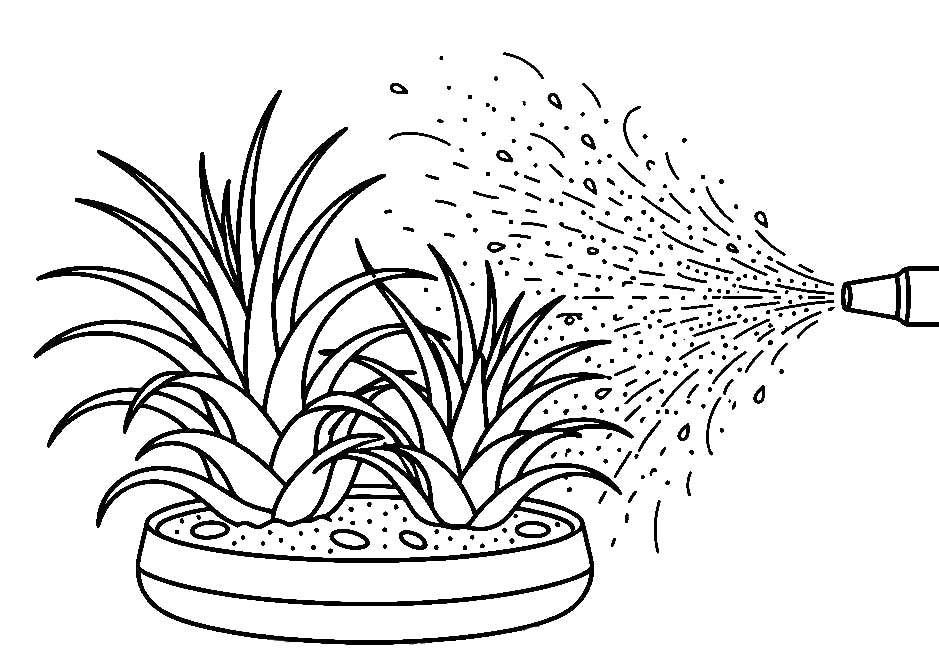
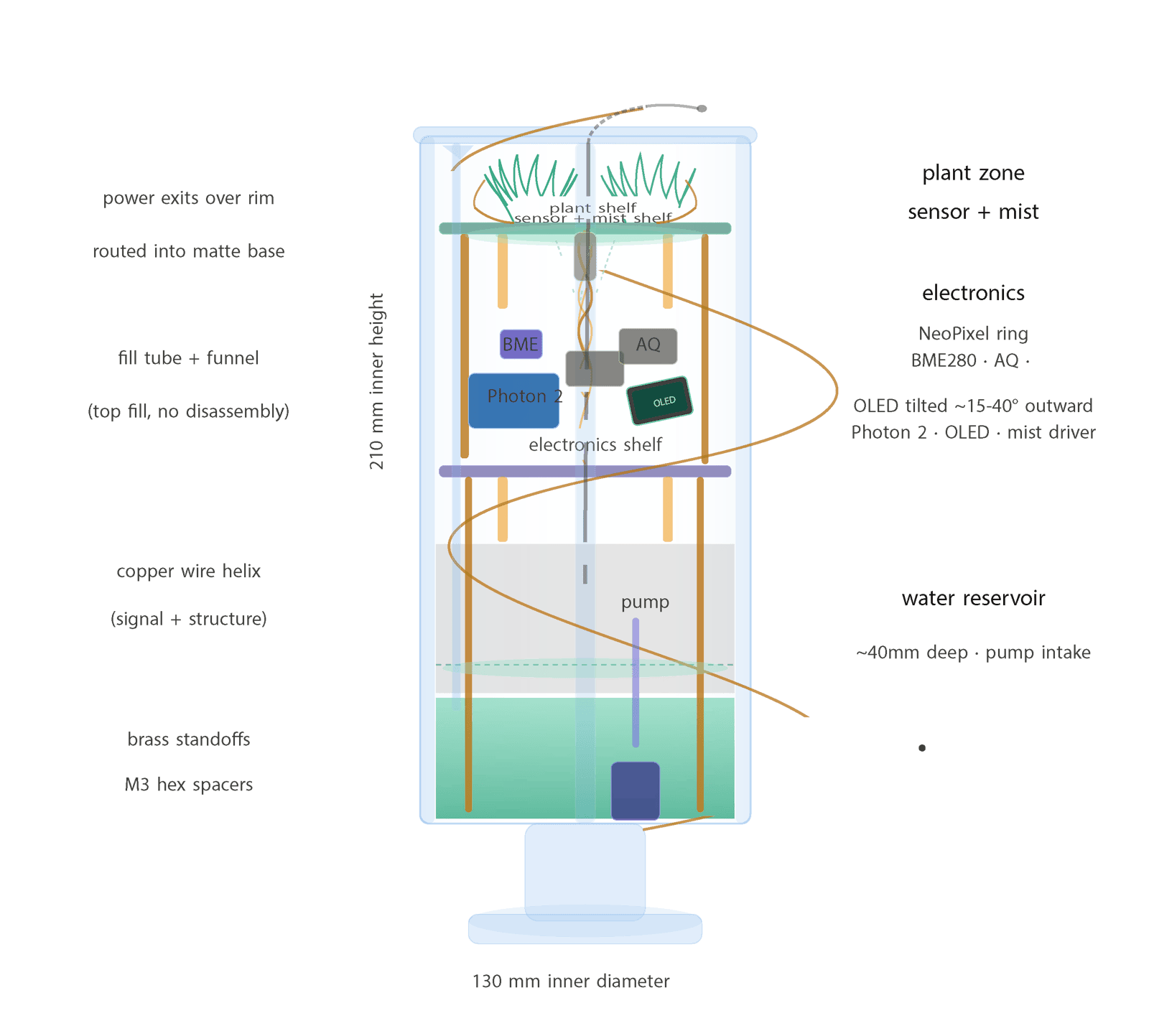
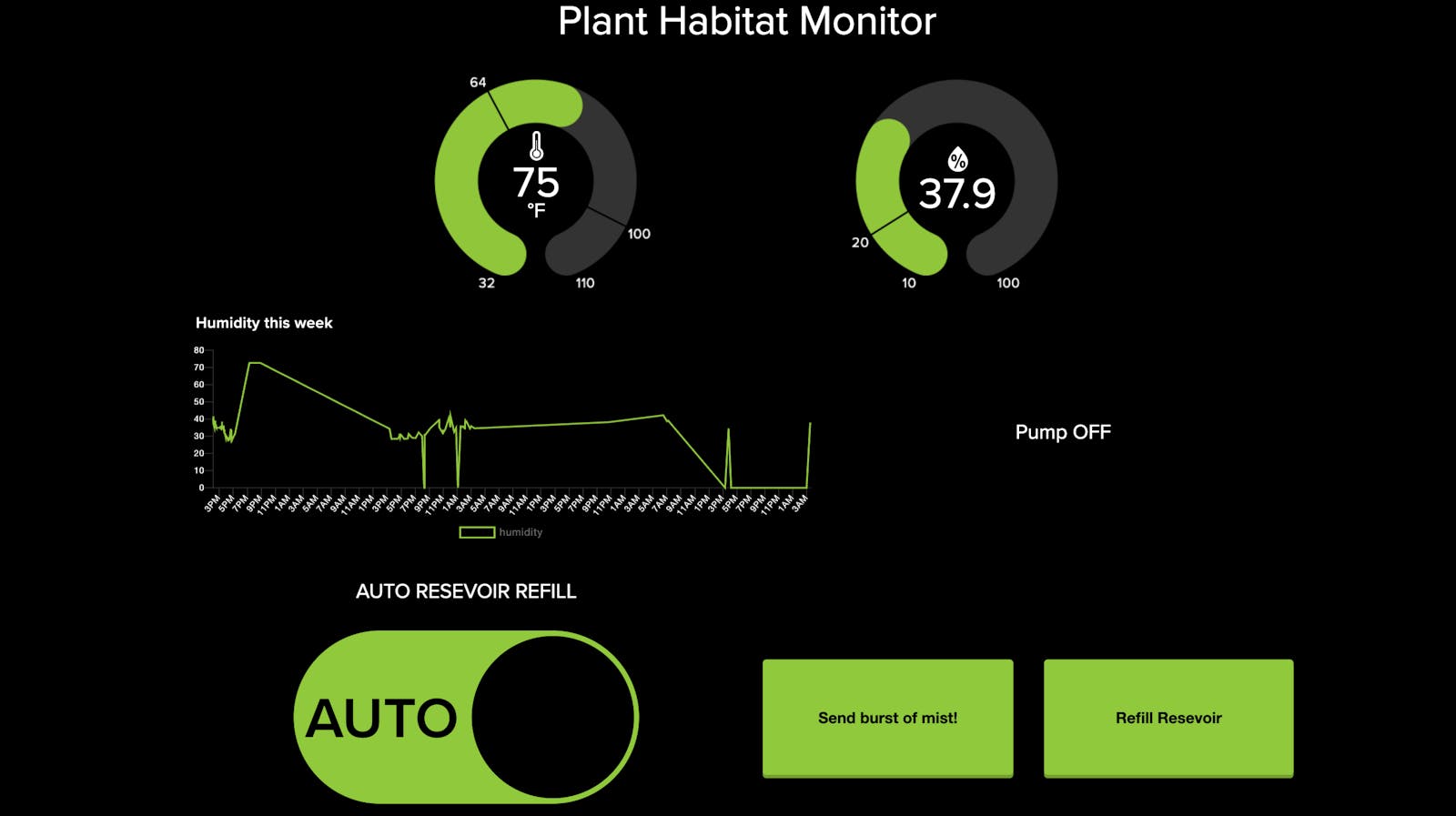
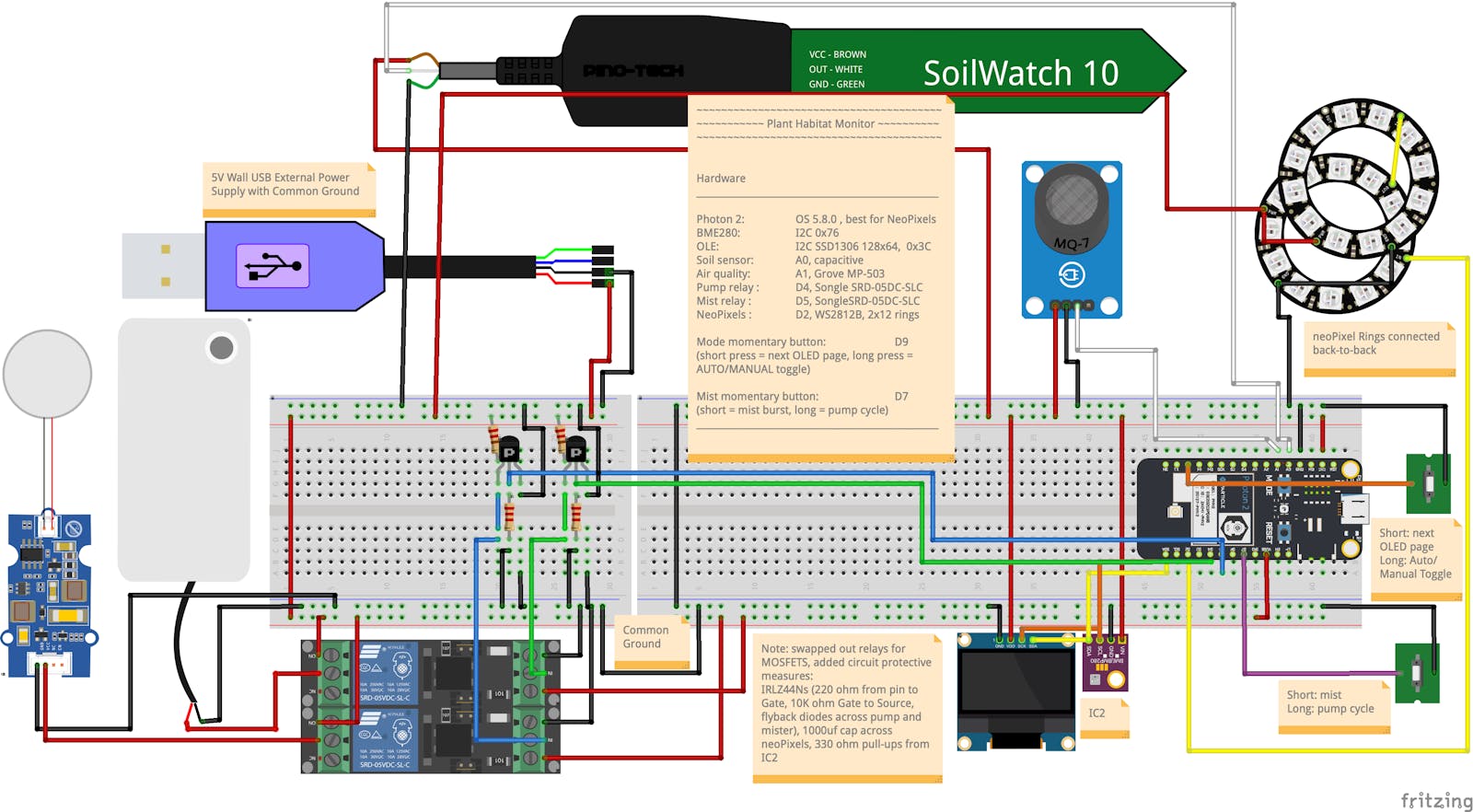
    Air plants take their water from the air, which means they want misting rather than watering — and they want it often enough that a person will inevitably forget. So the vase does it: a tiered sensor array reads the environment, a piezo atomizer mists on a cycle, a submersible pump handles the reservoir, and an OLED and a pair of NeoPixel rings report what is going on. It publishes to the cloud so I can check it from anywhere.


    Built from

    • Particle Photon 2
    • SparkFun BME280 atmospheric sensor
    • Grove capacitive soil moisture sensor
    • Grove air quality sensor v1.3
    • SSD1306 OLED display
    • 5 V submersible pump and a piezo atomizer with oscillator board
    • Grove optocoupler relay (M281)
    • Two NeoPixel WS2812 rings
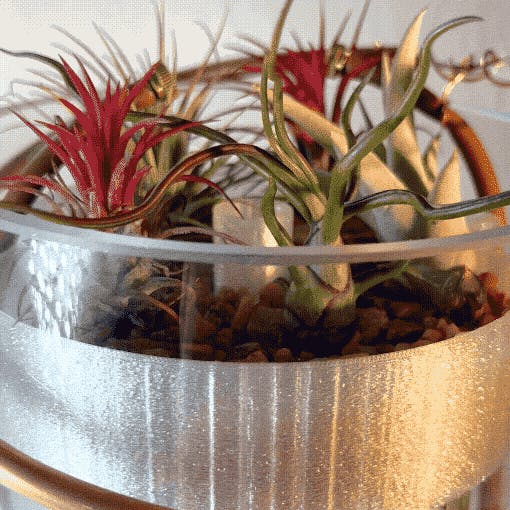
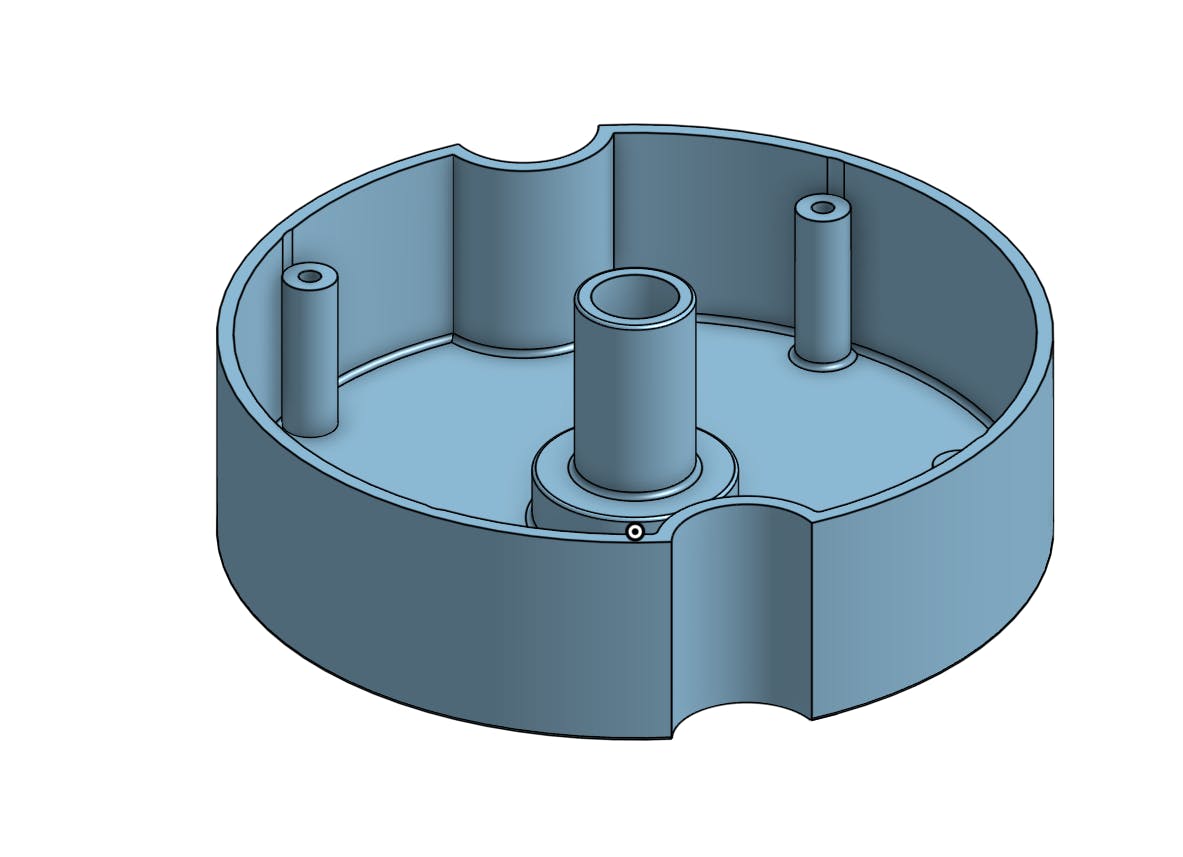
    • Custom gravel dish, designed and printed to fit the vase

    Platform — Particle, Adafruit IO, Seeed Studio, SparkFun
    Year — 2026

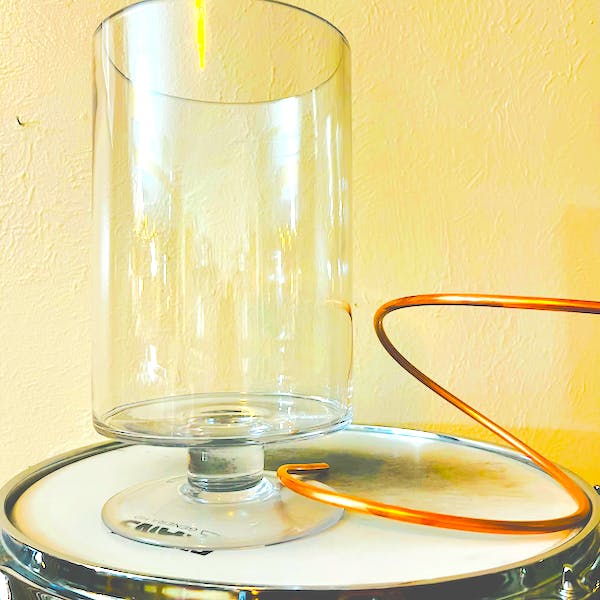
    This idea is twenty-one years old. In 2005 I drew a conceptual design for an indoor irrigation system — a green interior that waters itself, with a valve and a timer worked out in watercolour. This vase is that drawing, built.

  • Saucier’s Sentinel

    Saucier’s Sentinel

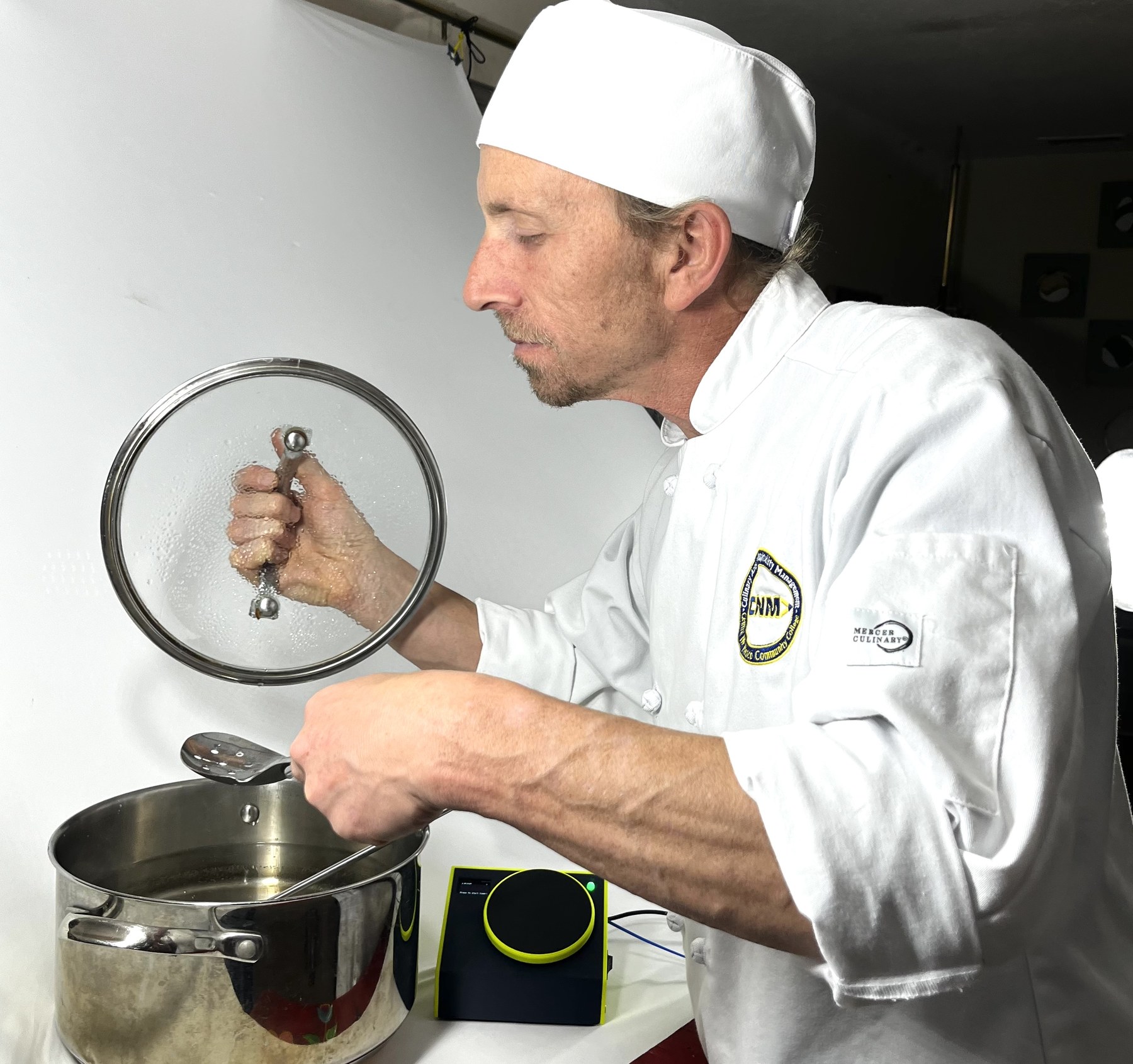
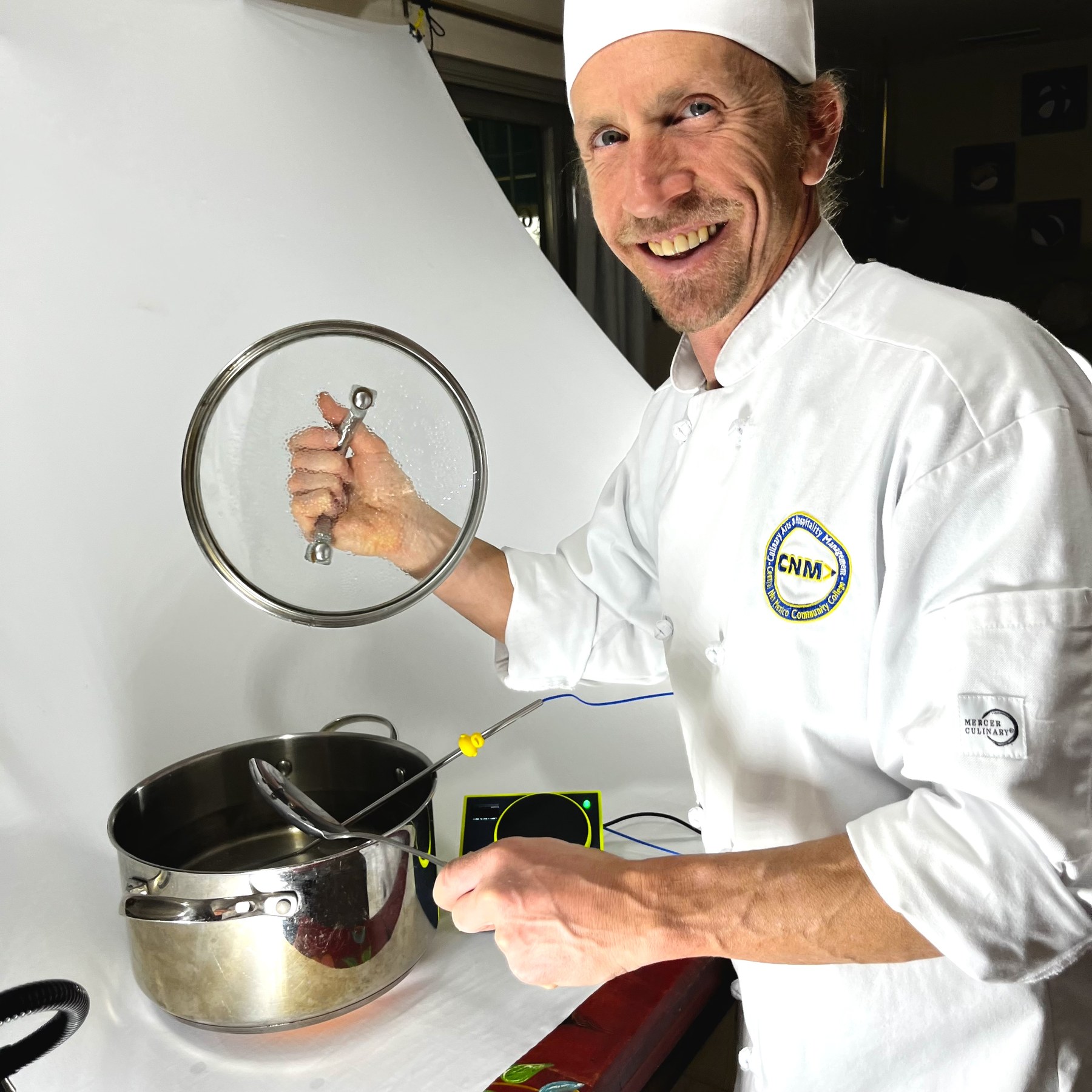
    A hot-process timer for the stove. It watches the pot and tells you, on its own face, whether you are still inside the window you meant to hold.

    Hot-process cooking — hot sauce, soap, preserves, confectionery — lives or dies on holding a temperature band for a set length of time. Miss the band and you have either not finished the process or ruined it, and you usually find out later. A probe thermometer tells you the temperature right now; it does not tell you whether the cycle is going well.

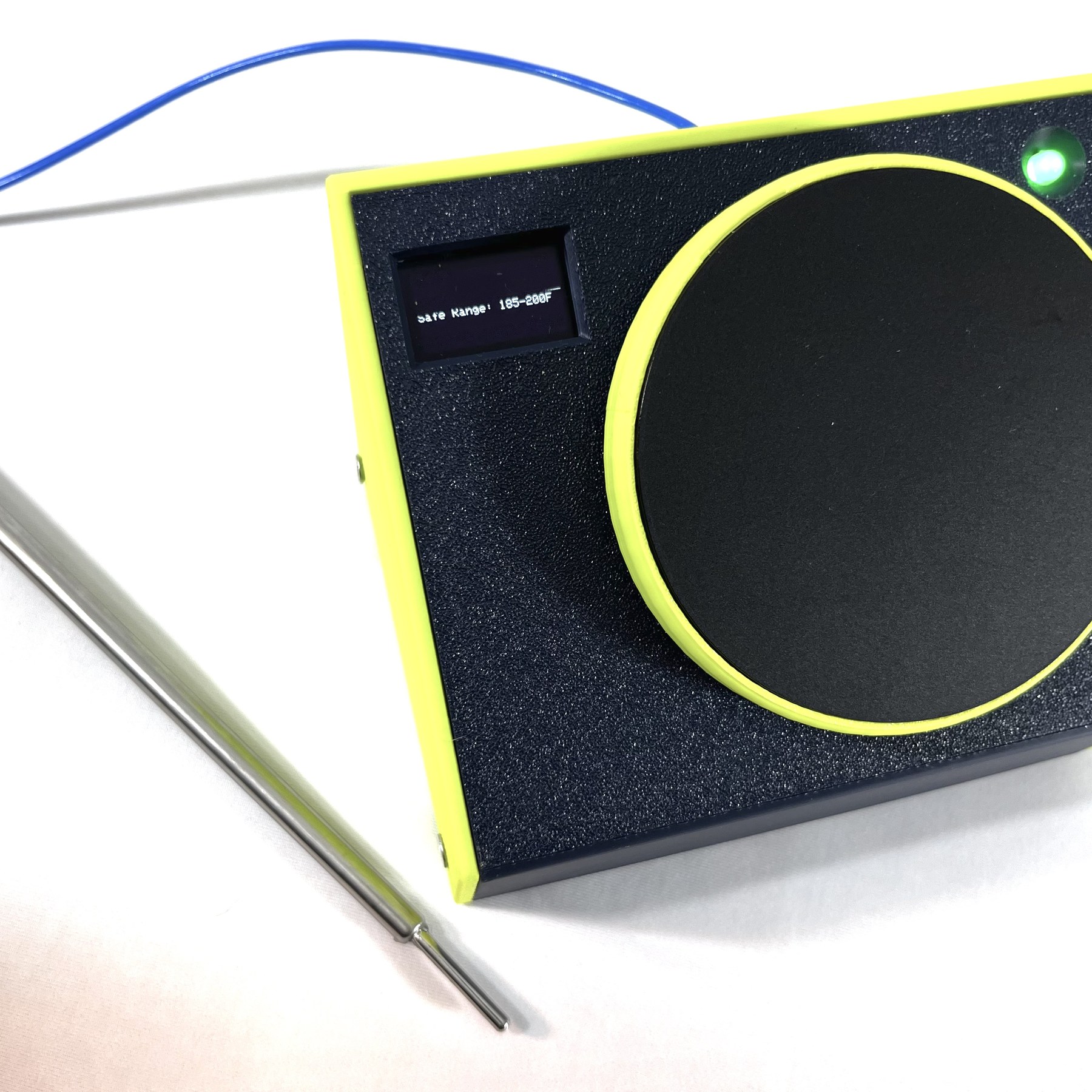
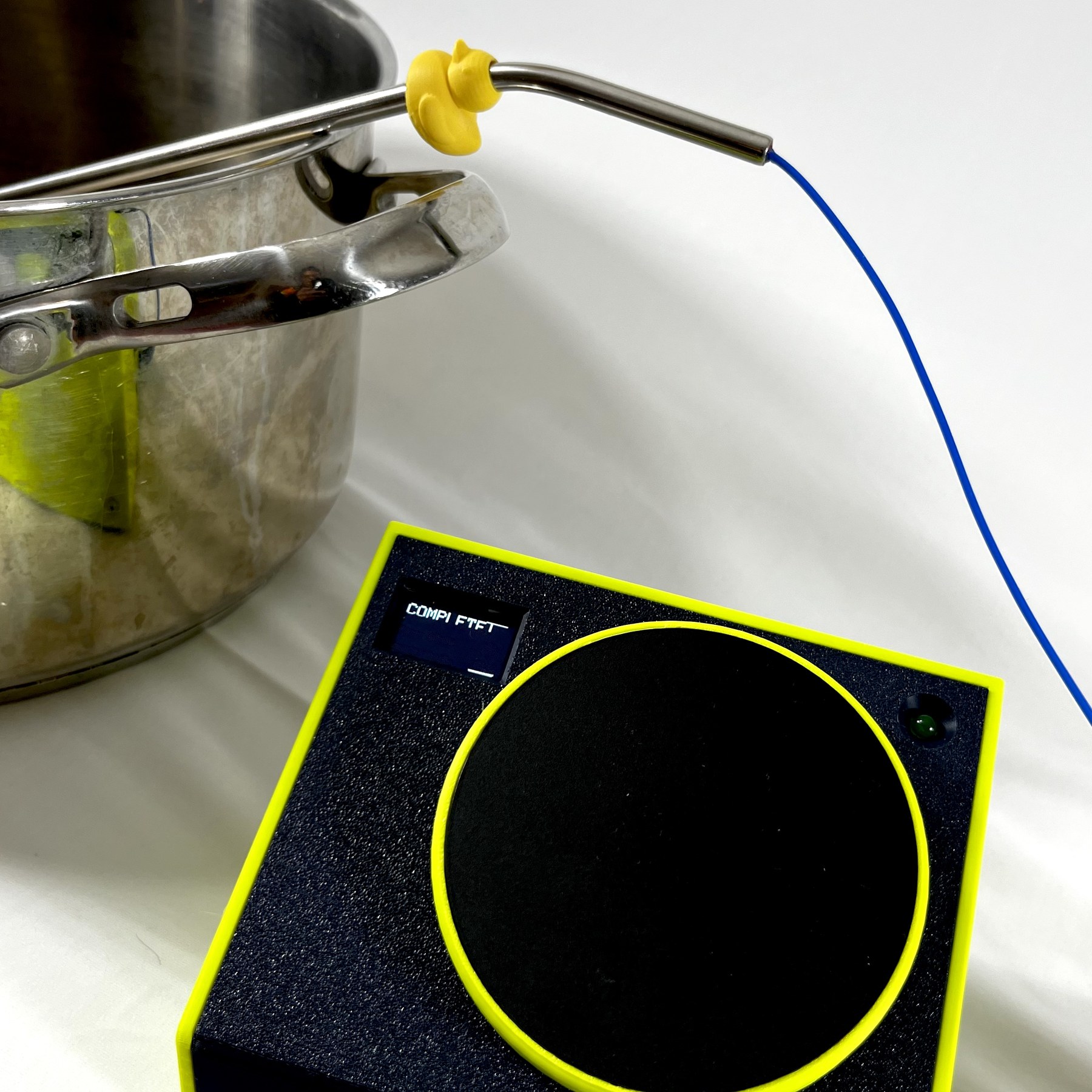
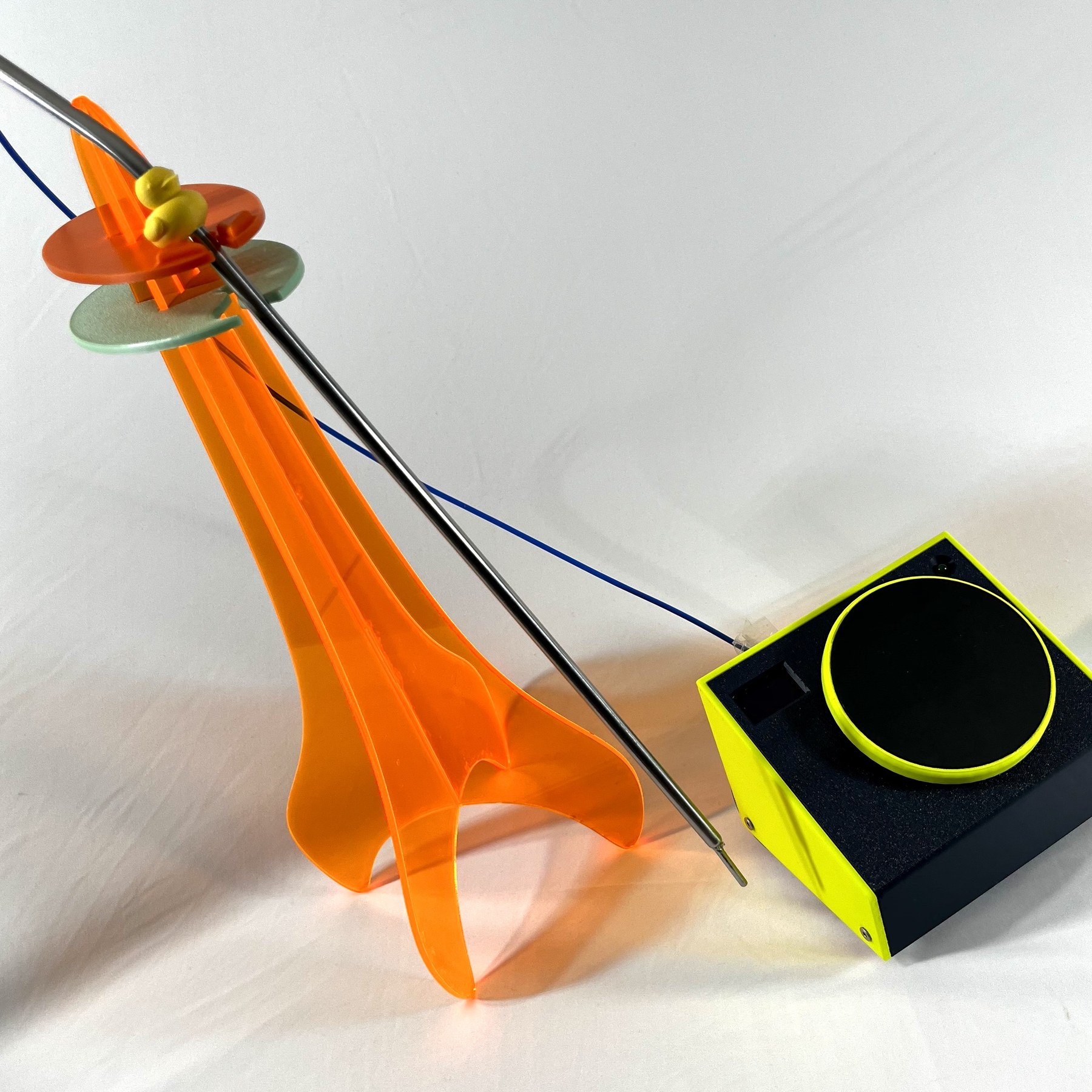
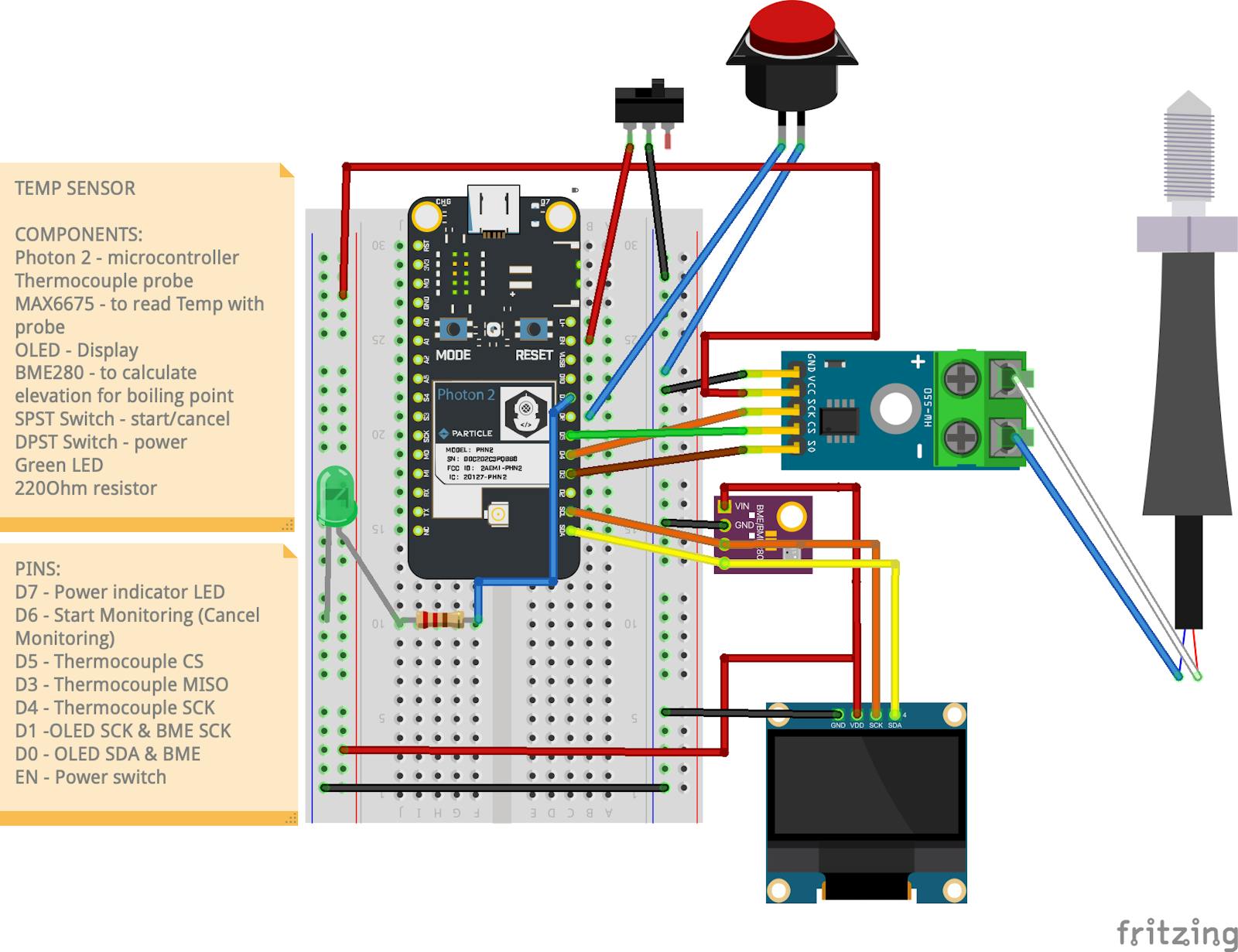
    So the Sentinel holds both. A K-type thermocouple reads the pot, the display shows the safe range you are aiming for, and the device tracks whether you have stayed in it for long enough. When the cycle is satisfied it says COMPLETED, and it says it from across the kitchen rather than from a screen you have to pick up. A keyswitch arms it, so it cannot be started or stopped by a wet elbow.


    Built from

    • Particle Photon 2
    • K-type thermocouple with MAX6675 amplifier
    • Grove 0.66″ OLED (SSD1306)
    • BME280 for ambient temperature, humidity and pressure
    • SPST keyswitch to arm, DPST power switch
    • 5 mm green status LED with 220 Ω resistor
    • 3D-printed enclosure and probe stand

    Read the full build on Hackster →

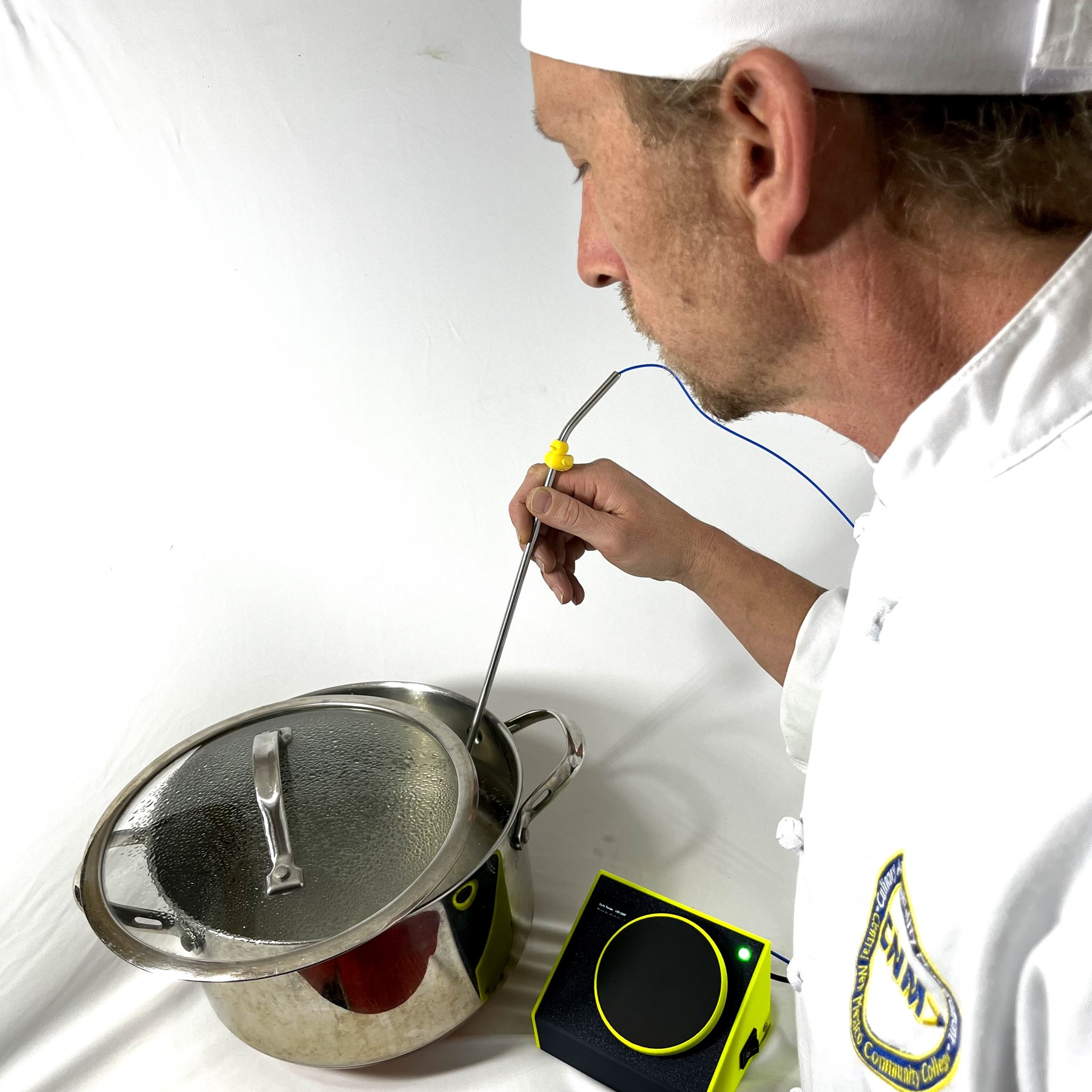
    Photographed in the kitchen with Mike, in his CNM Culinary Arts whites.

    Particle Photon 2 · thermocouple · 3D-printed housing · 2026